
In this article we’ll cover the following:
- What is Candida Overgrowth?
- Proper diet with coconut oil
- Coconut oil and its potential relationship with candida
Recent studies have examined whether a diet containing coconut oil may influence Candida yeast colonization. Some research suggests that coconut oil and its fatty acids may have antifungal properties, although this does not establish coconut oil as a treatment for Candida infections.
Coconut oil contains fatty acids that have been studied for antifungal activity. However, claims that coconut oil can stop Candida overgrowth or cause a “healing crisis” are not well established, and symptoms of a Candida infection should be evaluated by an appropriate healthcare professional.
It’s advisable to start with small dietary amounts of coconut oil if you choose to include it in your diet. Individual responses can vary, and coconut oil should not be used as a replacement for medical treatment.
Coconut oil has effective anti-fungal properties that help your body fight Candidiasis. Using the correct amount of coconut oil regularly causes the Herxheimer event or ‘healing crisis.’ This condition happens due to the rapid yeast die-off. It’s an indication that candida overgrowth is stopped and your body progressively heals from candida infection.
It’s advisable to start off lightly especially for first-time coconut oil users. The increase of coconut oil dosage to two to three tablespoons daily may happen in the next few days.
One research study examining coconut oil and Candida was an animal study conducted by the University of Tufts, titled “Manipulation of Host Diet to Reduce Gastrointestinal Colonization by the Opportunistic Pathogen Candida albicans,” published in mSphere in 2015.
The study involved mice with Candida albicans and found that a diet containing coconut oil reduced gastrointestinal colonization of Candida. Because this was an animal study, the findings should not be interpreted as evidence that coconut oil can treat Candida infections in humans.
The study included feeding coconut oil to mice with Candida albicans. In this study, researchers had found out that coconut oil reduced the colonization of candida in the stomach efficiently.
What is Candida Overgrowth?
Candida albicans overgrowth starts when single-celled yeast shows up in a human host’s moist and warm tissues.
A balanced diet, normal metabolic function, and proper digestion can contribute to overall health. The body’s microbiome contains many different microorganisms, including bacteria and yeast.
When Candida grows excessively, it may be associated with health problems. Symptoms that could indicate an infection should be evaluated by a healthcare professional rather than self-treated with coconut oil.
Serious Candida infections can require medical treatment. Anyone experiencing persistent or severe symptoms should seek appropriate medical care.
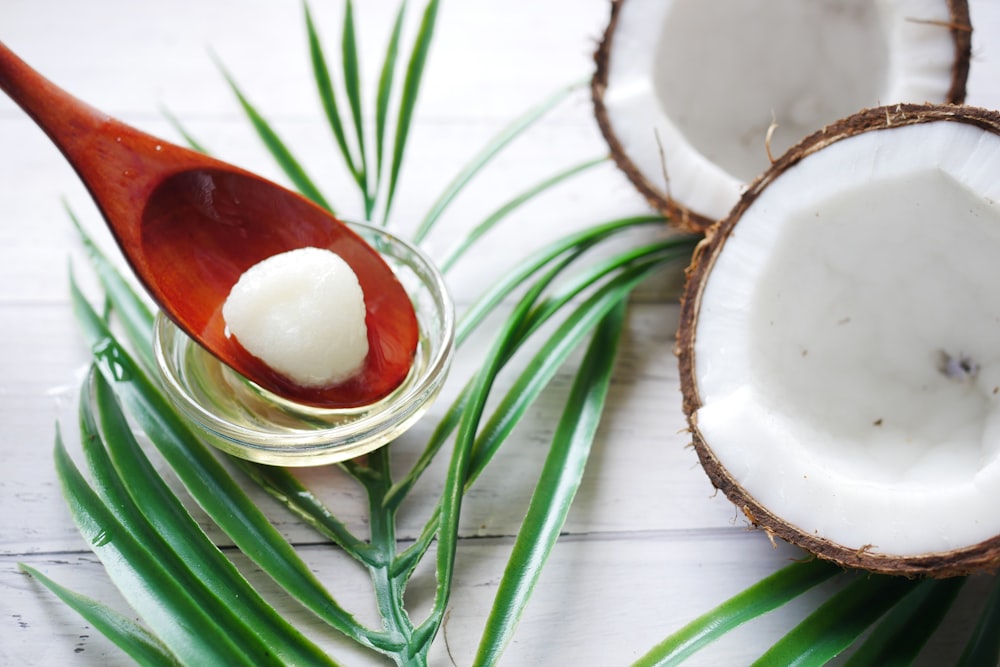
Diet and Coconut Oil in Relation to Candida
Dietary choices may influence overall gut health, and some people choose to reduce refined carbohydrates and added sugars as part of a balanced diet.
Choosing less processed foods and more whole foods may also support overall nutrition. However, dietary changes alone should not be considered a cure for Candida infections.
Fermented foods and beverages may also be included as part of a varied diet. Their effects can vary between individuals and should not be considered a replacement for medical treatment.
Studies on Coconut Oil and Candida
Some studies have investigated coconut oil and its fatty acids for their potential effects on Candida. However, there is no established medical dosage of coconut oil for treating Candida infections.
Research has also examined monolaurin, a compound derived from lauric acid, and its antimicrobial properties. Much of this research is laboratory-based and does not establish coconut oil as a clinical treatment for Candida infections.
Coconut oil contains lauric acid and caprylic acid, fatty acids that have been studied for antimicrobial and antifungal activity. Research has investigated how these compounds interact with certain microorganisms, including Candida species.
Research has also examined several fatty acids found in coconut oil, including caproic, caprylic, capric, and lauric acids, for potential antifungal activity. Further research is needed to determine their clinical relevance in humans.
Coconut oil can still be enjoyed as a food or used for its many culinary and personal-care purposes. It should not be relied upon to diagnose, prevent, cure, or treat Candida infections.